
Building Secure Software
Secure Software Development Lifecycle (SSDLC)

To build secure software, we need a crucial, comprehensive software security strategy - a proactive and layered approach that embeds security considerations and compliance requirements throughout the entire software lifecycle, not as a last-minute patch. Compliance is about managing risk, and in this context, security inherently includes compliance. What is this strategy/framework? It is Secure Software Development Lifecycle (SSDLC).
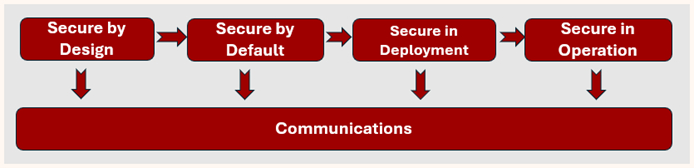
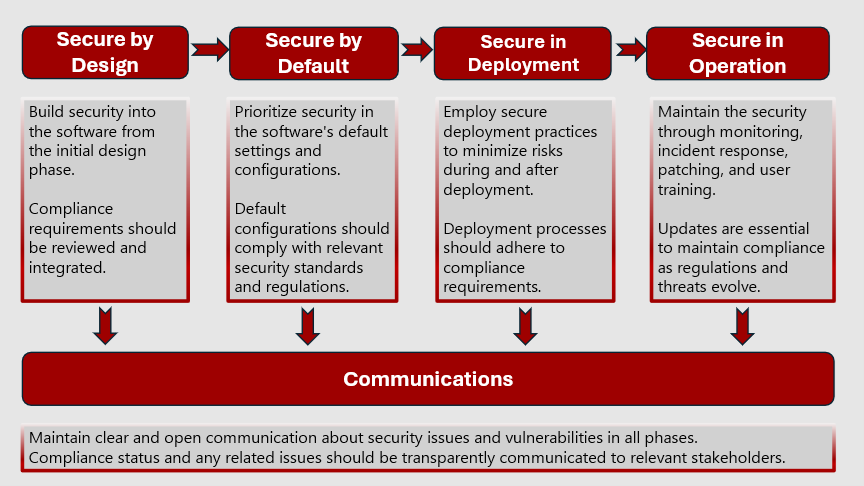
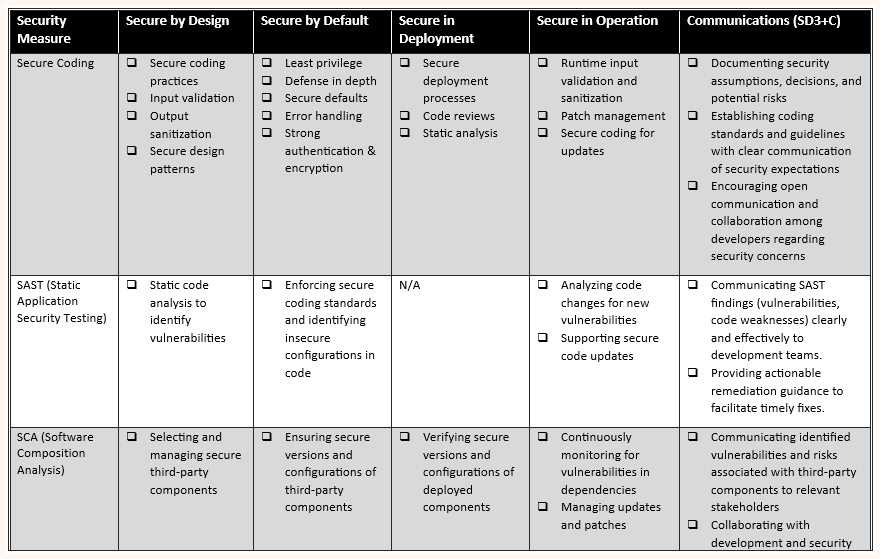
The SD3+C framework (Secure by Design, Secure by Default, Secure in Deployment, +Communications) provides a valuable foundation for building secure software. Adding “Secure in Operation" offers a more holistic view of software security by addressing potential threats not only during development and deployment but also throughout the software's active use. In this article, a fresh perspective on SSDLC that encompasses this approach/framework is presented.
"Who owns security?" It is an intriguing question. While the Security team plays a vital role, they are not the sole stakeholders. Product owners, including developers, QA, DevOps, and SRE engineers, share this responsibility equally.
Think of it as a relay race, where each team member carries the baton of security, passing it on seamlessly to the next. This race never ends, and it goes on with each release or a Potentially Shippable Improvement (PSI) till the product/application is decommissioned.
With this collaborative approach in mind, let us explore how to build and deploy secure software. We will dive deep into the guiding framework: SSDLC, understanding what to defend and how at each phase.
With this collaborative approach in mind, let us explore how to build and deploy secure software. We will dive deep into the guiding framework: SSDLC, understanding what to defend and how at each phase.
Attack Landscape
Understanding and mitigating threats (attacks) is at the heart of this approach. Let us understand the concepts around threats. We begin with Attack Landscape.
Attack landscape encompasses:
(What) Attack (Threat) : The actual malicious action or event that exploits vulnerabilities within the software to steal data, disrupt the system.
(Who) Attacker (Threat Actor) : The entity or individual who initiates the threat or attack. They can range from lone hackers to organized crime groups or even nation-states.
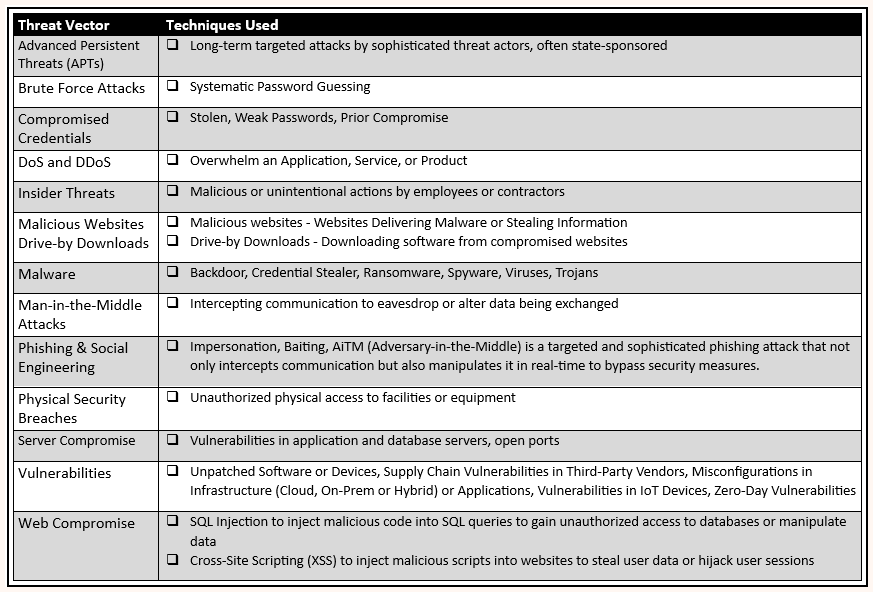
(How) Attack Vector (Threat Vector) : The specific method or pathway used by an attacker to exploit a vulnerability and carry out a threat. E.g., exploiting vulnerabilities (Unpatched Software or Devices, Supply Chain Vulnerabilities in Third-Party Vendors, misconfigurations etc.)
(Where) Attack Surface : All the vulnerabilities in the software that can be exploited.
To secure our software is to reduce the attack surface of the software.
To do so, we must first identify and understand the threats we face at each phase. Then, we must actively implement countermeasures against potential attacks at every layer of our defense.
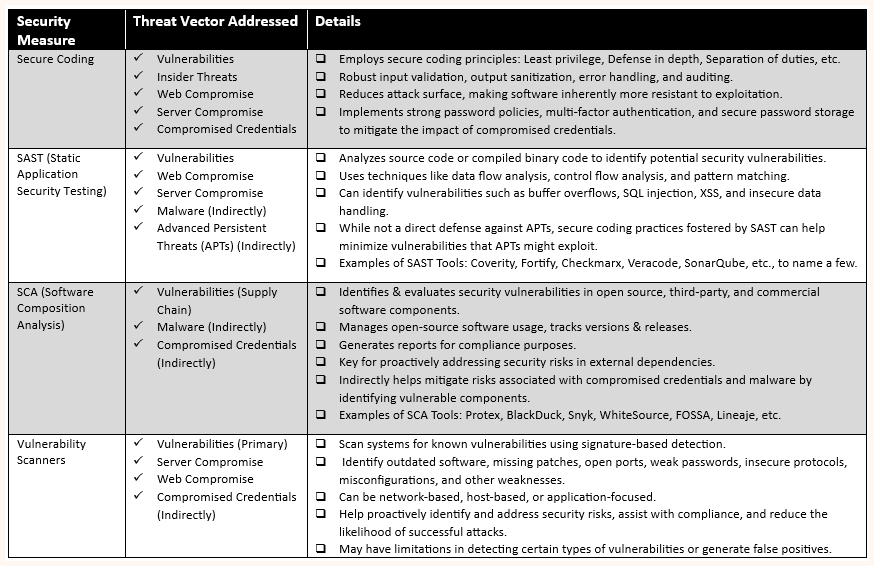
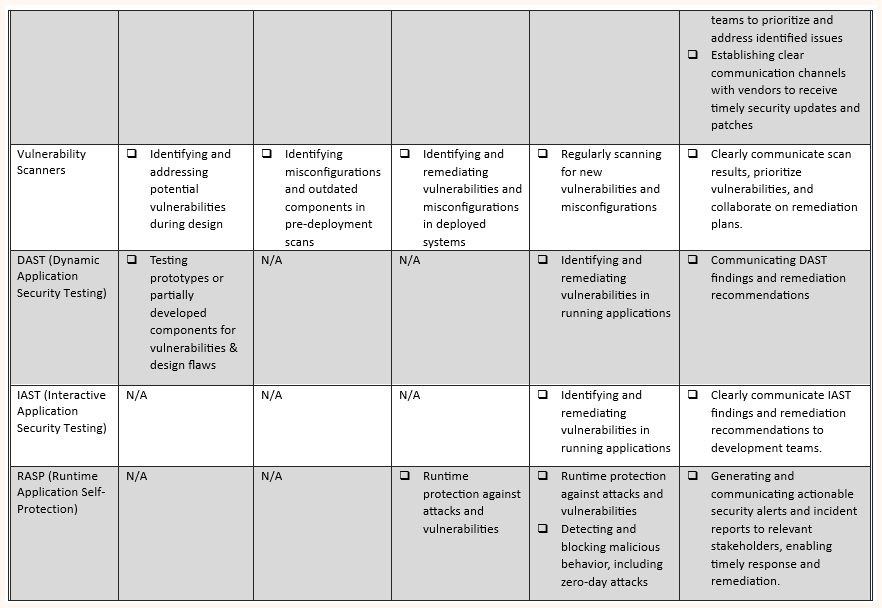
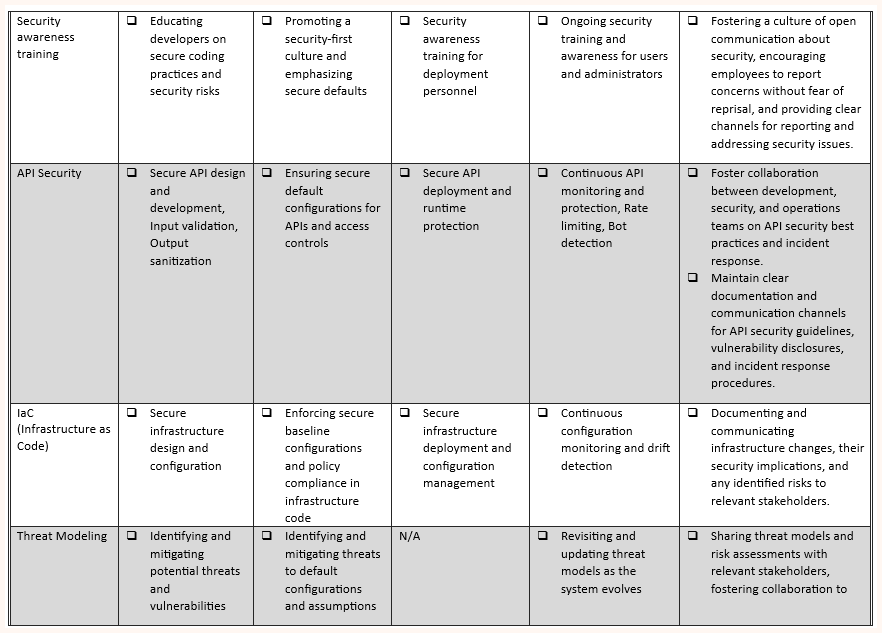
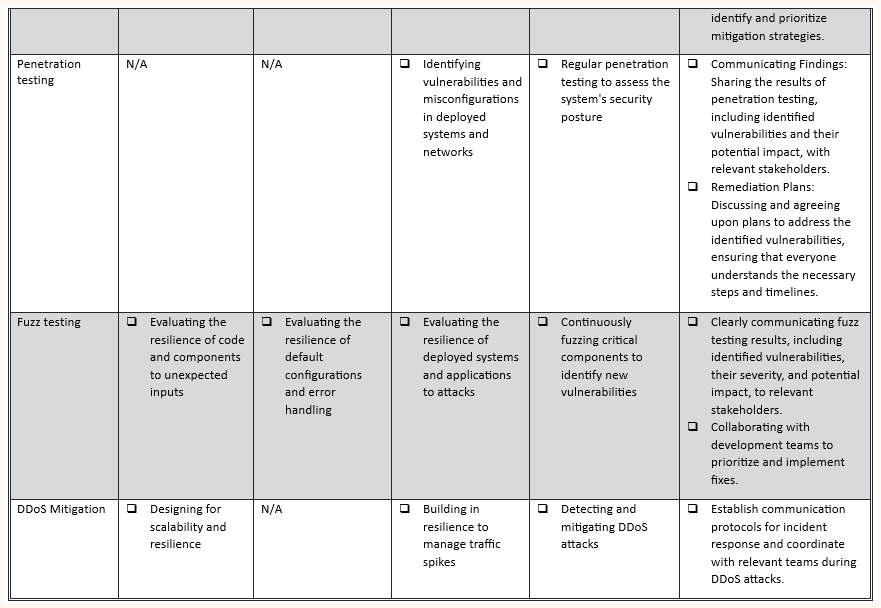
The following tables break down the problem statement, providing detailed information on threat vectors and corresponding security measures.
Threat Vectors used by Attackers
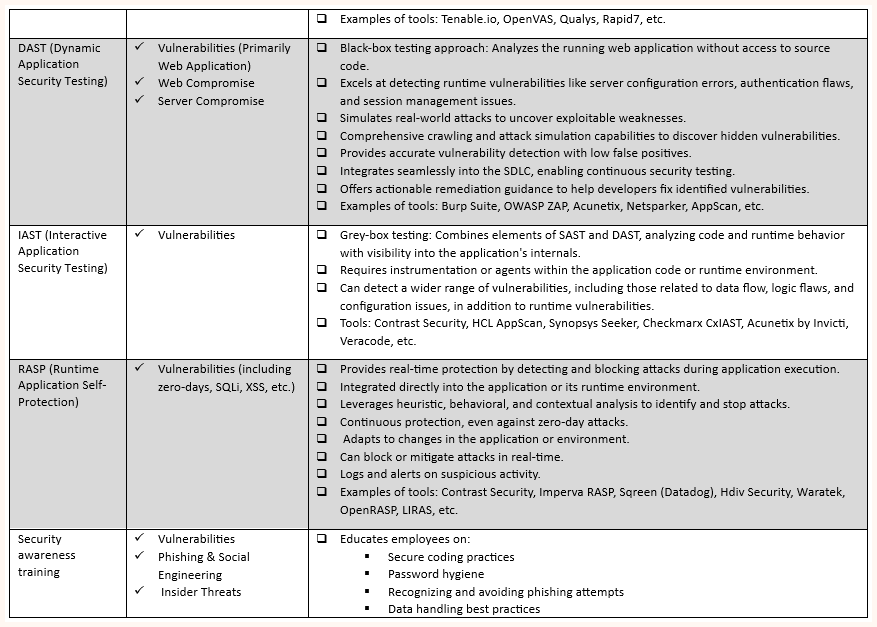
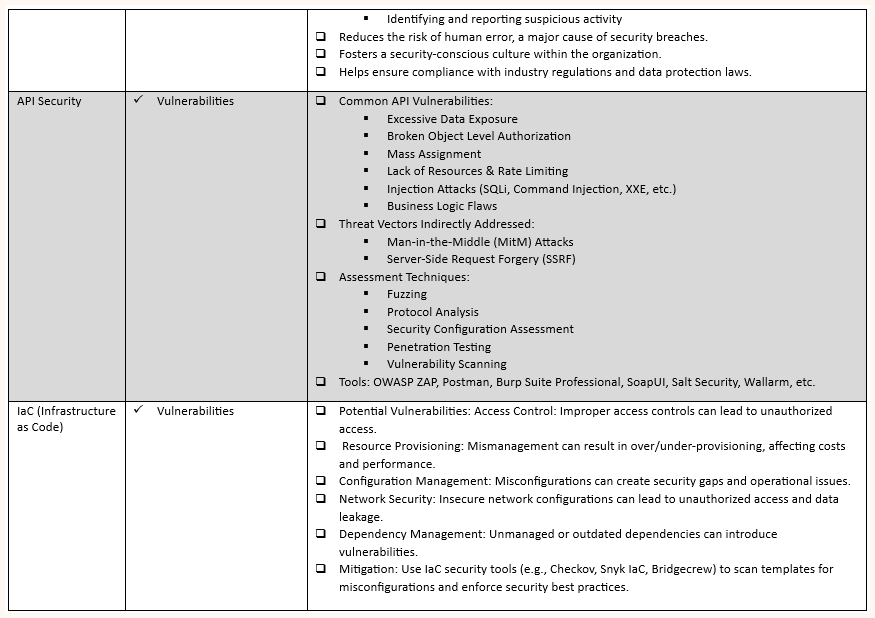
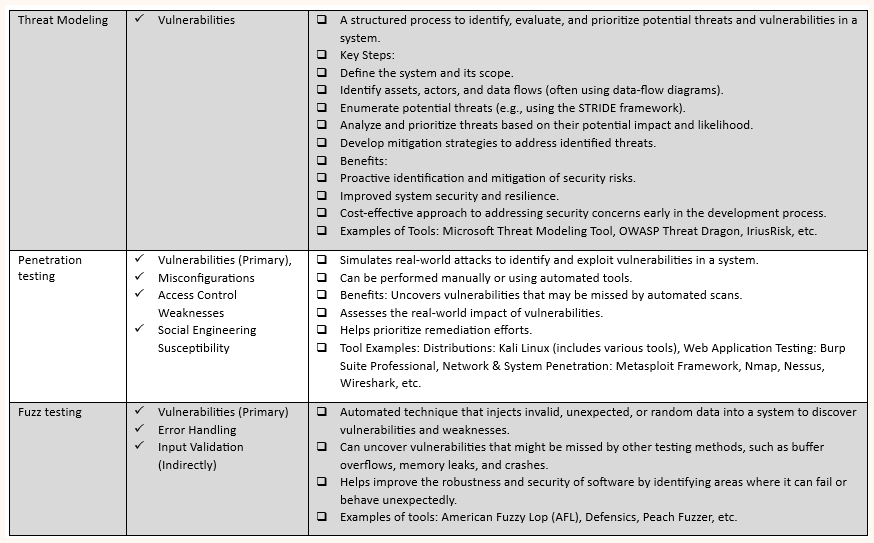
Security Measures that counter the threat vectors
Security Measures to be applied in each phase of Software Life Cycle
1. Threat Vectors used by Attackers
2. Security Measures that counter the threat vectors
3. Security Measures to be applied in each phase of Software Life Cycle
Secure Software: A Journey, Not a Destination
In conclusion, the journey to building secure software necessitates a proactive and multi-layered approach that encompasses the entire software development lifecycle. The SSDLC framework, coupled with the SD3+C principles, provides a robust roadmap for integrating security measures at every stage, from design to deployment and beyond.
By understanding the attack landscape, implementing appropriate security measures, and fostering a culture of collaboration and continuous learning, organizations can significantly reduce their software's attack surface and enhance its resilience against evolving threats. The dynamic nature of the cybersecurity landscape demands constant vigilance and adaptation, but by embracing a holistic and proactive security strategy, we can build software that is not only functional and innovative but also secure and trustworthy.
The content in certain sections has been collated with the assistance of Gemini.
#SSDLC, #SecureSoftwareDevelopment, #SoftwareSecurity, #Cybersecurity, #DevSecOps, #SD3+C, #SAST, #DAST, #SCA